


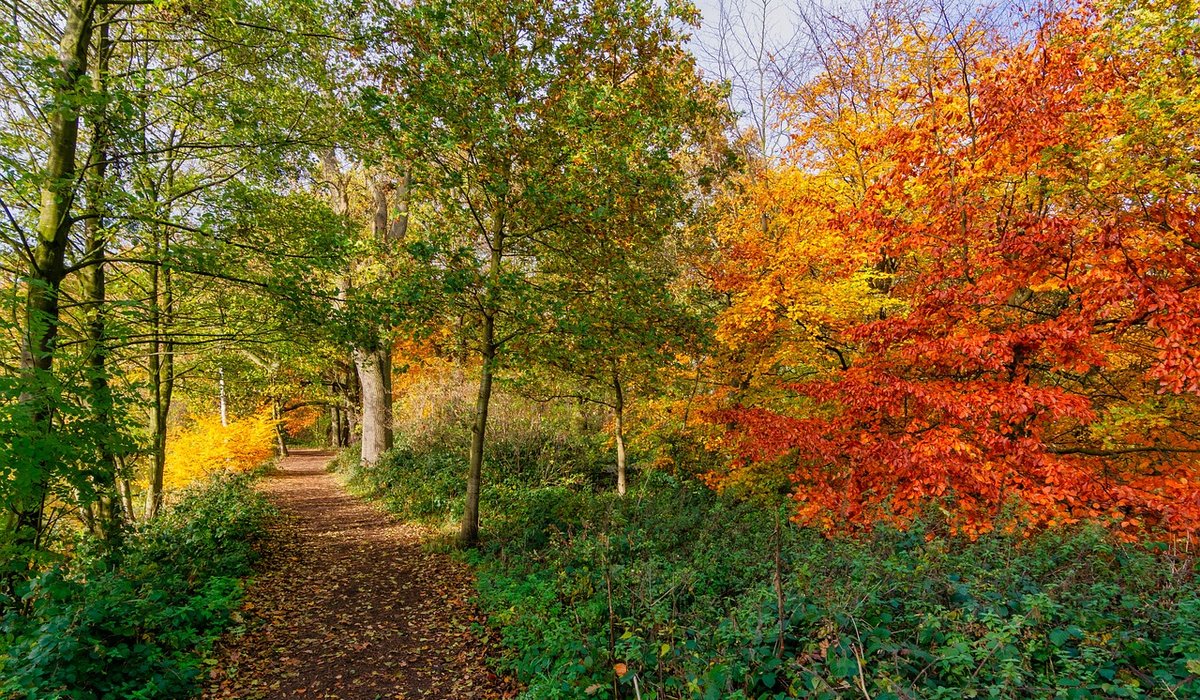
Why the woods whisper direction
Step into any British broadleaf wood and you enter a landscape shaped by wind, light and water. Our prevailing south-westerly winds sweep in from the Atlantic, carrying rain and salt. They lean oak, ash and Scots pine; they comb the canopy; they decide which side of a trunk stays damp. For the forager, campfire cook and weekend wanderer, these clues are a quiet compass. They are not a replacement for a map and compass — always carry both, and know how to use them — but they sharpen your eye and deepen your sense of place.
Moss and moisture: beyond the north-side myth
The old saying that moss grows on the north side of trees is a half-truth. In Britain, mosses and liverworts love shade and damp, so they often flourish on north- and east-facing bark, away from the strongest sun. But in a dense wood, the canopy, slope and soil matter more than compass points. A mossy trunk might simply be in a hollow that holds mist.
- Look for patterns, not single clues. A cluster of Hypnum cupressiforme on several trunks at the same height suggests a shaded, damp side.
- Check the base of the tree. North-facing roots and lower trunks often stay mossier because the sun rarely reaches them.
- Notice Sphagnum. In boggy clearings, Sphagnum mosses indicate wet ground, which usually lies in hollows or on the north side of a slope.
- Dry south-facing bark. On exposed edges, south- and west-facing bark dries faster and may be bare, cracked or covered in sun-loving lichen.
Use moss as a supporting clue. If you have a map, you can often match a mossy bank to a north-facing slope or a shaded stream bank.
Trees as wind vanes and sun dials
Wind leaves a permanent signature. On exposed heaths and woodland edges, trees grow asymmetrically. The windward side — usually south-west in most of the UK — is battered, so branches are shorter, buds may be fewer and the trunk can lean away from the wind. The leeward side, by contrast, often has longer, sweeping branches. This is called flagging.
- Prevailing wind: expect the strongest lean and the most stunted growth on the south-western side of isolated hawthorns, rowans and Scots pines.
- Lichen: some crusty lichens prefer the windward, rain-washed side of trunks; others favour sheltered bark. Learn your local species rather than trusting a single rule.
- Sun and shadow: on a sunny day, the sun rises in the east and sets in the west. Tree shadows point roughly north in the middle of the day, but in Britain the sun never passes directly overhead, so shadows are always somewhat long. At noon, a shadow points north — a useful check, not a precise bearing.
- Snow and frost: in winter, north-facing slopes and tree bases hold frost longer. Melt patterns can reveal which way the land faces.
Combine these signs. A tree that leans south-west, has moss on its northern base and casts a noon shadow north is telling a consistent story.
Reading a British woodland: a practical walk
Choose a wood you know well. Take a map, a compass and a notebook. Pause every few hundred metres and ask three questions: which way is the wind hitting my face? Where is the sun? Which side of these trunks is damp? Then check your compass. You will soon learn how your local landscape bends the rules.
- Start with the edge. Woodland margins show wind and light most clearly. Look at the shape of the canopy — it often streams away from the prevailing wind.
- Move into the interior. Deep in the wood, moss and moisture matter more than wind. North-facing banks may be thick with ferns, moss and bluebells in spring.
- Find a clearing. Clearings let you see shadows and sky. Use the sun to orientate, then step back under the canopy.
- Record your findings. Note the date, weather and what you saw. Over a season, your woodland becomes a familiar map.
Never rely on natural navigation alone. A map and compass are essential safety tools, especially in poor visibility or unfamiliar terrain. Natural signs confirm your navigation; they do not replace it.
Campfire cookery and foraging with a compass in your pocket
Once you can read the wood, you can enjoy it more responsibly. A small campfire for cooking is a privilege, not a right. Check landowner permission, use an established fire pit or a fire blanket, and keep flames away from roots, moss and dry leaf litter. Deadwood is vital habitat, so take only small, loose twigs and fallen branches — never break living trees or strip bark. In many woods, collecting deadwood is legally restricted; always ask.
- Forage lightly. Pick only abundant species you can identify with certainty: blackberries, hazelnuts, wood sorrel, wild garlic in spring. Leave plenty for wildlife and regeneration.
- Avoid polluted edges. Do not forage beside busy roads, sprayed fields or dog-walking paths.
- Cook simple. A billy can of nettle and potato soup, or apples baked in embers, needs little fuel. Douse the fire with water, stir the ashes, and check it is cold before you leave.
- Use your compass. Before you light a fire, take a bearing back to the path. It is easy to become absorbed in cooking and lose your direction as the light fades.
Conservation: leave the clues for the next wanderer
Mosses, lichens and ancient trees are slow-growing and fragile. They can be damaged by a single boot or a careless fire. Stay on paths where they exist, keep fires small and cold, and take all litter home. If you practise natural navigation, do it without disturbing the signs you are reading — do not peel bark or pull moss from trunks. The best woodland navigators are conservationists first and foragers second. They know that a leaning oak, a mossy bank and a south-westerly breeze are not just waypoints; they are the living texture of a British wood. Carry your map and compass, tread lightly, and let the trees teach you the way.


Leave a reply