


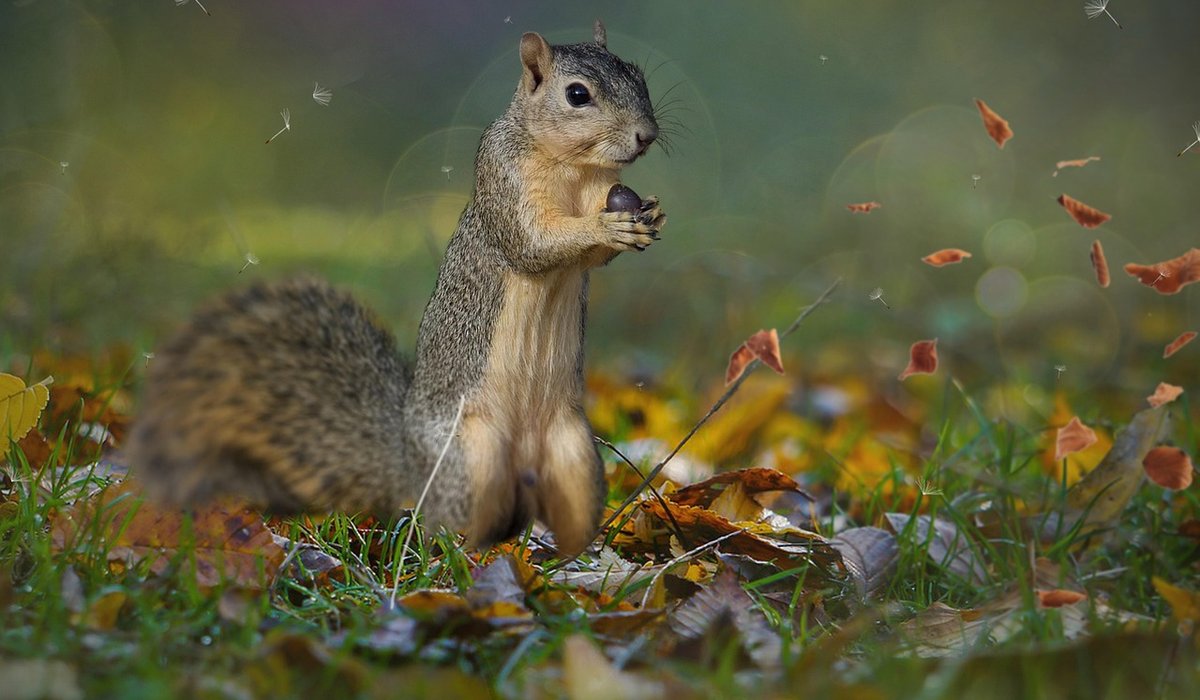
Why Northern Conifer Woods Are Red Squirrel Country
Red squirrels are creatures of the northern conifer woods. In Britain, strongholds remain in the Scottish Highlands, Argyll, Dumfries and Galloway, Northumberland's Kielder Forest, parts of Cumbria, Anglesey, and Northern Ireland. They favour Scots pine, lodgepole pine, Norway spruce, larch and mixed woodland with a good canopy. These trees provide a reliable crop of seeds and cones, and the open understorey makes it easier to spot movement. Grey squirrels do less well in large conifer blocks, so reds hold on where greys are scarce. Look for woodland edges, mature stands, and quiet corners away from busy paths.
Reading the Signs: Dreys and Chewed Cones
Before you see a red squirrel, you will often find its signs. Dreys are spherical nests of twigs, roughly 30–50cm across, lined with moss, leaves, and soft bark. They are usually built in a fork of branches, against the trunk, or in a dense whorl of conifer branches, often high up. Breeding dreys are larger and more robust. Look for a ball of twigs that looks too neat for a magpie's nest. Chewed cones are the best clue. A red squirrel strips the scales cleanly, leaving a neat core with a small tuft at the tip. It often feeds on a stump, log, or favoured branch, so you may find a pile of cone cores and scales beneath. Grey squirrels tend to leave a ragged, messy core, often bitten through the base. Also look for stripped bark on young trees in spring, and small excavations where squirrels have buried fungi or nuts.
The Quiet Hours: Dawn, Dusk and Still Weather
Timing matters. Red squirrels are shy and most active in the first two or three hours after dawn, and again in late afternoon. In winter, they may be out in the middle of the day, especially on mild, still days. Choose calm, dry weather. Wind and heavy rain keep them in their dreys. Early morning is best because the woods are quiet, dog walkers are still in bed, and the light is soft. Arrive before sunrise, find a comfortable spot with a clear view of the canopy, and wait. Listen for a scolding rattle, a sharp chuck-chuck, or the soft patter of cone scales falling. A red squirrel will often announce itself before you see it.
Fieldcraft for Shy Squirrels
Patience is everything. Wear dull, quiet clothing. Avoid rustling waterproofs if you can. Move slowly, stopping often to scan the canopy. Use binoculars — 8x42 is ideal — and look for movement high up, not just on the ground. Red squirrels are smaller than greys, with rich reddish-brown fur, a white belly, and prominent ear tufts in winter. Their tail is bushy but narrower than a grey's. When you find one, do not approach. Sit still, let it come closer, and keep your distance. Avoid playback calls; they stress the animals. Keep dogs on a lead. Never feed red squirrels — human food harms them, and hand-feeding encourages disease. If you find a drey, mark it in your memory and move on quietly.
Conservation and Foraging with Care
Red squirrels are protected by law in the UK. It is an offence to disturb them or their dreys. Report sightings to local red squirrel groups, volunteer for survey work, and support habitat management that favours conifers and connected woodland. Pine marten recovery may also help reds by reducing grey numbers. If you forage in these woods, take only common, abundant plants. Leave hazelnuts, pine seeds, and fungi for the squirrels — they are vital autumn stores. Never dig up plants or strip bark. Stay on paths where possible, and keep to the edges of sensitive areas.
A Campfire Breakfast After the Watch
After a dawn watch, a quiet campfire breakfast is one of the great pleasures of woodland living. Use a small stove or an established fire pit where permitted, and check local bylaws first. Never light a fire in tinder-dry conditions or in sensitive woodland. Keep it small, use only dead wood from the ground, and never leave it unattended. A simple pot of porridge oats with water, a pinch of salt, and a handful of foraged bilberries or blackberries makes a fine reward. If you have foraged sweet chestnuts or hazelnuts, roast a few — but leave plenty for the wildlife. Eat slowly, listen to the wood, and remember that the best sightings come to those who wait.


Leave a reply